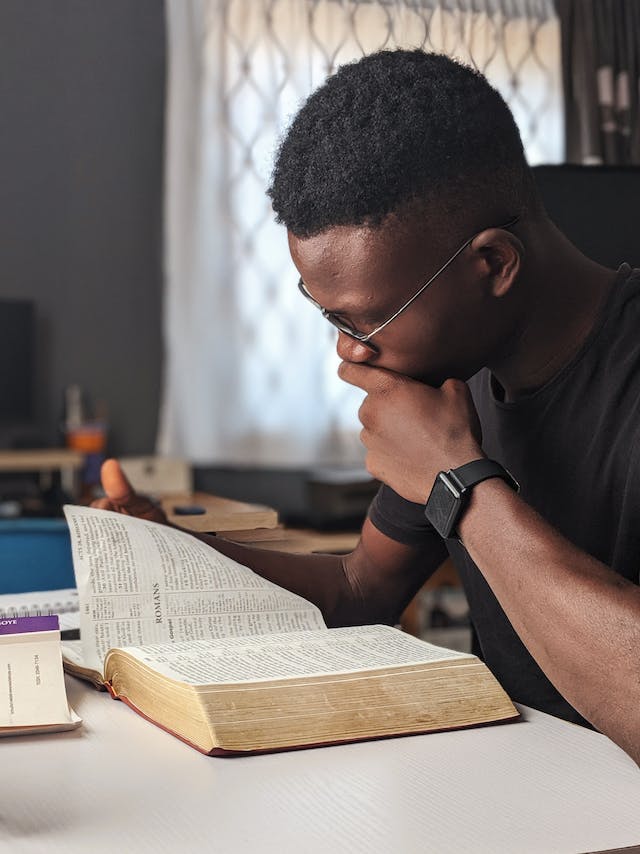
Not everything is my fault

I have always believed in effort and personal responsibility. Growing up, I was taught that we have a role to play in this universe. We should not just sit around and wait for God to do everything for us. So, I worked hard at everything I was given; convinced I was the master of my destiny. As the saying goes, “you reap what you sow”. Yet, as I journey through life, I have realized that effort does not always guarantee the desired results. Sometimes the harvest looks nothing like what you sowed.

Jesus taught his disciples a parable about a farmer in Mathew 13:24-29. In the parable he explained that a farmer sowed seeds on his farm but, in the night while men slept, an enemy came and sowed tares (weeds). When the crops began to grow the workers noticed that there were weeds among them and they asked, “Did we not sow good seeds? Where then are the tares from?” The farmer replied “this was the work of the enemy.”

This parable teaches us that we are not the only ones sowing seeds. There is an enemy waiting for the night to fall and then he sows his bad seed. We can not blame the workers for sleeping because it is natural for men to rest after a long day at work. Yet the enemy takes advantage of this moment. And it was only after the crops had grown that the famer realized there was a product he never sowed!

This lesson resonates deeply with life and with Christian living. We usually blame ourselves when things go wrong, asking, “What did I do wrong?” or “What did I miss?” But not every failure or setback is our fault. Sometimes, despite our best efforts, an unseen adversary works against us.

We always talk about how Judas betrayed Jesus and how he was such a bad person. However, Judas spent three years helping Jesus in His ministry. His love for money was a flaw, but he might have continued as a disciple. The trouble came one night, as Luke tells us “Then Satan entered Judas, called Iscariot, one of the Twelve (Luke 22:3)“. It was only after the devil came that Judas mastered the courage to go to the Pharisees and betray Jesus. The enemy had sowed a bad seed.

I am learning that not everything is my fault. I understand that there are battles beyond my control—forces at work that are not flesh and blood but spiritual in nature. Ephesians 6:12 For our struggle is not against flesh and blood, but against the rulers, against the authorities, against the powers of this dark world and against the spiritual forces of evil in the heavenly realms.

In the past each time things did not work out as I hoped and planned, I blamed myself. “There is something I did not do, something I missed, something I did wrong” – often carrying the guilt of not being good enough or not doing enough. But now I know there are many things that had nothing to do with my efforts, but everything to do with the enemy’s schemes.

Certain theology had taught me not to give the devil any attention. That “All that matters is what I do!” However, I’ve learnt that a strong will and determination alone are not enough because the enemy, a master of the unseen world, stops somewhere and resists. It is not about whether I give him attention or not, because on his part he is – working in the shadows – sowing bad seed to frustrate and make it look like I never sowed anything good to begin with.

Therefore, rather than be hard on myself all the time, I have learnt to be gracious with myself and to forgive myself. I think this is why there are many things God – in his mercy and wisdom – does not even condemn us for; because he knows an enemy came in.

So, I have learnt to pick myself up from the frustration and place I was at – where I was blaming myself for everything wrong – and realize that I have an adversary. The answer is not in self guilt but in resisting the devil. James 4:7 Submit yourselves therefore to God. Resist the devil, and he will flee from you. Even Jesus taught his disciples in the lord’s prayer “deliver us from evil” (Matthew 6:9-13).

The answer is in prayer: that even though we cannot stop the enemy from sowing seeds, we can pray that our seed survives – and bears good fruit (Matthew 13:8), that endures (John 15:16). And no matter how much he tries, in the end we stand victorious, because we have God on our side (1 John 4:4).

Occupy till I come

Someday, you will read your Bible as you always mundanely do. It could be sunny outside or even murky; it does not matter. But that day, your heart will burn as you eat away the words of life. Then, as you go through the pages of scripture, something of an epiphany will happen. Like the sight of a red-dressed damsel across the street, your attention will be drawn to one particular utterance in scripture, like a beckoning of eternity, a call familiar to the sons of the kingdom. Just like Father Abraham had when he was still in Ur of the Chaldea’s (Genesis 12:1). That scripture will sink into your subconscious, resonating into the very essence of your being, as though it is your life’s purpose to give it expression. Then for a moment, as though Einstein’s inertial frames of reference all stopped at once, as though the scripture is the manifestation of a man, in whom your true essence lies and your predestined inheritance resides, the evidence of things unseen will find a place in your heart. Then perhaps John 1:14 will start to make sense, or perhaps you have not come to think of the Word putting on flesh yet.

Perhaps, lightly, you will dismiss the motion in your heart first. Then, you will read the scripture again, marking it in your Bible and proceeding to note it down in your notebook. It could be that you may go about your daily business, but a reverberation of that scripture will linger in your heart and mind. The phrases and lines of that scripture will pop up in your mind like a man being troubled by digestive heartburn. As I have come to find out, the Lord God has made provisions in His grace that as men seek Him, he may be found of them.

Isaiah 55:6
Seek ye the Lord while he may be found, call ye upon him while he is near.

If there was a single-entry verse into the mystery of God revealing himself to men in the Bible, then I yet have much work to do in understanding. For it is revealed that we are the members of one body (Romans 12:4), but we have different offices (which, being interpreted, means a doing, a mode of acting, a deal, a transaction, a thing to be done, a business). Therefore, every man will experience the same Spirit, submit themselves to the same Lord, and find the same God. But our transactions will differ, each according to the grace given (Ephesians 4:7), according to the measure of Christ.

In any case, the revelation of God is not for sport, that we may brag amongst colleagues or accrue mental acuities, but for the profit of the body and the exaltation of the Kingdom of God. “For whom much is given, much is expected (Luke 12:48)” remains a pillar of stewardship in all arenas of human endeavour, even so in the Kingdom of God.

Luke 19:12-13
And he called his ten servants, and delivered them ten pounds, and said unto them, Occupy till I come.

In one of those sermons of the Lord, he made a statement that I have grown to endear. He said, “Occupy till I come.”
As I turn the pages of the Bible and walk about my personal life, he tells me that I have spaces – businesses, papers to author, audiences to address, souls to win, etc. – to walk into and utilise the “unrighteous mammon” to find a “home” according to Luke 16:9-11. Our entry into places of our occupation will always come by natural, worldly orderings. Perhaps it is a job, an assignment, a friendship, or a relationship. The Lord expects that we occupy. And as the proverbial “Trojan Horse”, the Lord will come to occupy that space if we stand strong in the grace that He gives.

Hebrews 10:37
For yet a little while, and he that shall come will come, and will not tarry.

As sons of God, we have been given the Spirit of God and an assurance to cry to him, “Abba Father”. This same Spirit has been given to us, that we may have the earnest of the Spirit (2 Corinthians 5:5, Romans 8:23) in bringing forth salvation to creation. We possess a Kingdom mindset to occupy, that in there we may “groan, agitate, cry, workout, influence, possess” and that by us God may have a victory upon the earth.

For the Lord will show us the path of life; He will call us to deliver talents, businesses, and “pounds” into our stewardship, and it will be required of us to be found faithful (1 Corinthians 4:1-2).

As for me, the statement “Occupy till I come” became that lingering phrase by which I saw the Lord (1 Corinthians 15:8). I pray that today God will be found of you and that you will embrace his calling to occupy till he comes.

God’s Promises

Campaigning season was one of my favorite times at the university. I was always looking forward to the 2 or 3 weeks of intense campaigning. The noise, the rallies, the posters, the sweet bribes, and the occasional ice cream always made me happy. My favorite thing was listening to the candidates make their speeches and tell us about Makerere University’s problems and what they were proposing to do to fix them.

Whether it was at a campaign rally or one-on-one, I was a good listener. I attentively listened to a candidate who assured students that they would no longer be concerned about missing marks, another who addressed the safety of girls in the university. I always found it interesting when they made over-the-top claims, but they were bold and loud – almost believable. For example those who pledged to collaborate with as many alumni as possible to repair the damaged block C of Lumumba Hall. We all knew that was not happening soon but as I said they are believable in the heat of the moment.

Watching them for years helped me understand that one thing human beings love to do is make promises. Politicians, of course, make them more than anyone else because what stands between them and the coveted seat is the number of promises they make. 

I have spent many years observing men, and I am aware that many of them share this common characteristic. A man promises the woman he loves heaven on earth and promises to forsake all others. The woman, in turn, promises to submit and devote herself to him completely. When C.E.O.’s take the job, they promise to achieve the highest turnover the company has ever seen under their leadership, and the executive directors guarantee that no matter how high the target is, they will surpass it with hard work and determination. The parent promises the child that they will receive whatever they desire. And I do not want to get started with the businessmen and the promises they make to get us to buy from them instead of their competitors.

Some of these people make these promises with the intention of fulfilling them; they come from a good heart. Others, fully aware that they will never deliver on their promises, do so because they know it’s what their audience wants to hear. Whatever the case, many times people do not deliver on the promises they have made. As certain as it is that humans make promises, it is also certain that most promises unfortunately go unfulfilled. Sometimes it is beyond our human capacity to fulfil the promise, and no matter how hard someone tries, it is not enough. 

People often carry broken hearts and feel disappointed when someone they trusted to keep a promise fails to do so. As a result, people have learned to safeguard their hearts by not trusting those who make promises and rightly so; after all many in the past have made promises but failed to fulfil them.

Regrettably, the disappointment and frustration we have experienced with people affects our view of God. Somehow, we think that even God will disappoint us and fail to fulfil his promises. Maybe God will be like most of our politicians: excite us for a season, especially when we are in church, and then, in the end, not deliver. Many of us will not openly admit it maybe for fear of being judged as a faithless Christian but if we did open heart surgeries to see what is in the hearts of men, we would find the struggle men have and the question “Can God be trusted to keep his promises?” lingering somewhere.

So I started to search scripture looking for what it had to say about promises. It had quite alot to say; I will share a few of those verses. I read some verses from Joshua. Joshua 21:45 tells us, Not one of all the Lord’s good promises to Israel failed; everyone was fulfilled”. Joshua 23:14 asserts this further, “Now I am about to go the way of all the earth. You know with all your heart and soul that not one of all the good promises the Lord your God gave you has failed”.

Joshua was about to die when he spoke these words to his people. They say to pay attention to the last words of a dying man. It was important to remind the Israelites of the nature of God; he is a promise-keeping God. Twice, Joshua tells the people that none of the promises God made failed to come to pass. Every promise he made, he fulfilled. This is God’s nature, and no one should be more sure of this than the children of God.

The best part is that Joshua testified that he fulfilled all, not just some, of his promises. Sometimes we ask God that “kale at least do ko for me this one”. You want at least one thing in your life to be working. But if he is God, he will not stop at one, but at everything that he promised. Jesus Christ is the same yesterday, today, and forever (Hebrews 13:8). If he kept his promises to the Israelites, surely he has not changed, therefore we have this confidence that he will do the same for us.

“Sovereign Lord, as you have promised, you may now dismiss your servant in peace. For my eyes have seen your salvation” – Simeon attested in Luke 2:28–29. We do not know when this promise was given to Simeon but he patiently waited on God for it to come to pass. One day, stirred by the Spirit of God, he went to the temple and saw Jesus. God kept his promise to this old man. Simeon testified the same thing as Joshua had testified many years ago; God keeps his promises. Judith Babirye put it well in her song “Mukama Talimba”.

God isn’t in the business of breaking hearts; he’s in the business of mending them. Many things limit men, but they do not limit God. He reassures us of this in Matthew 19:26 –  Jesus looked at them and said, “With man, this is impossible, but with God, all things are possible”. He can fulfil all his promises. Therefore, it is up to us to search the Bible to see everything he has promised and believe him to fulfil it.

Even when life looks like it is so far from what God promised, the apostle Paul taught us something important in  2 Corinthians 4:18 – So we fix our eyes not on what is seen but on what is unseen, since what is seen is temporary, but what is unseen is eternal. God’s promises for us are eternal and everlasting, from generation to generation. One thing I have learnt in my Christian journey is that no matter what happens and no matter how long it takes, in the end God will keep his promises to us.

One day…

I remember meeting this young man years ago, while out on a school outreach; he was receptive when we approached him so we carried on with our message. After reading numerous passages from the Bible, we posed the question, “Do you want to give your life to Christ?”. He did not answer immediately, visibly thinking deeply about the question. When he finally replied, he said, “One day I will, but not today.” And despite our great efforts he could not be persuaded otherwise. I don’t know what happened to that young man because we were in a far-off region, but his response stuck with me.

When we were in school, the educational system always expected us to know what we wanted to be in the future. As early as primary school, we started singing songs about the wonderful future that education would surely bring.
“When I grow up, I want to become a doctor
I work very hard, I don’t relax
If I relax, everything will relax,”
, went the lyrics of a popular song at my primary school.

Every parent desired to hear about our goals for the future. They wanted to hear us say we would be doctors, lawyers, engineers. Dreams changed over time when we entered secondary school and were exposed to more challenging topics and subjects. Our syllabus in biology and chemistry told us that not everyone could become a doctor. But we still managed to navigate and reimagine what else we could become.

I’ve been raised with such a strong system of looking forward and striving for a bright future that, even as an adult, I find myself talking about my future goals all the time and always imagining what a glorious future I will have. I comfort myself on bad days by telling myself, “I will be great one day. I’ll accomplish big things one day”.

When this thought most recently crossed my mind, instead of relishing in it, for the first time I had to ask myself, “What about today? What do I do?” It caused me to consider the number of things I have put off doing because I believed I would get around to them at some point in the future. Now I am forced to ask; when will that moment arrive, and why can’t those things be done right now? While it is true that certain tasks are limited to the future – owing to time and resource constraints, many tasks can be accomplished today.

The lyrics of a song by American gospel singer TobyMac say, “If you have to start somewhere, why not here? If you have to start sometime, why not now?” Those were, in my opinion, really profound words. And I realized I should pray to God to know what to do in the here and now while I wait for God to show me what my future self will hold. Give us this day our daily bread, says Matthew 6:11. Jesus instructed us to ask the Father for our today when we pray.

I shall preach the gospel one day. So why not preach it today, one could ask? I plan to study my bible cover to cover one day. I plan to write a book one day. Why not get going right now? I’ll launch my business eventually; I’ll apply for the job eventually. I’ll ask that girl out one day; I will join church ministry; I will do charity, I will read that book, I will go back to school. The list of things we push to the future are endless.

Matthew 6:34 Therefore do not worry about tomorrow, for tomorrow will worry about itself. Each day has enough trouble of its own. We have a lot of work to accomplish tomorrow, but we also have a lot to do today. Have you completed everything that needs to be done today? Above all, are you aware of what needs to be done today? Are you aware of the things you can achieve today?

The future always looks promising, like it holds all the answers and all the solutions. God has put somethings in the future and you have to wait on him for them. But he has also put some things in our today and we owe it to ourselves to know what they are and start working on them.

You do not need a new year to do a cover to cover sweep of your bible, you do not always need all the many qualifications and experience you think you need to apply for a job; you can do it today. You do not have to wait for church to announce a fasting period; you can start your own today. There are many things we are qualified to do today. All we need is the bravery to move forward.

“One day at a time sweet Jesus
That’s all I’m asking of You
Just give me the strength
To do everyday what I have to do
Yesterday’s gone, Sweet Jesus
And tomorrow may never be mine
Lord help me today, show me the way
One day at a time
.”

One Day At Time by Lynda Randle

The Lord is the Hope of the Nation

It’s 6:23 a.m. I rush out of my house, a single room whose door is one with a window, a common architectural design for most rentals in the city suburbs. The dust rises above the loose-surface road as motorcycles whisk along the “kafunda”—narrowed paths in congested city suburbs—that connects to the dented tarmac road through Kawaala, my locality. It’s another day in this seemingly unending but laborious hassle to make a living.
It is the norm to be spotted in the distance by a matatu conductor, who thereby bellows “ogenda bulaaza” to mean “Are you going along, brother? I shrug in elitist disgust. But a man must bear the mayhem of the morning rush hour in this busy and rowdy town where everything must be earned at extra cost. Even a seat in these fourteen-seaters must be earned, if not by hearkening to the call of these hard-faced conductors; then through jostling with multitudes in this twilight of the day.

As we drive from Kasubi town centre to Kampala city centre, the crimson light of the sun in the distance graces the everlasting hills of the Kampala skyline, which is dented with a few high-rise buildings now cropping up. I wonder if it is due to an economic boom or luck. The roads are smooth because it takes no longer than 15 minutes to reach Watoto Junction. But it wasn’t always like this, and in most suburbs, it isn’t.

“60 years after independence, what happened?” I ask myself. As the scourge of “black tax”, rent, “pay-as-you-earn” tax (a tax levied on gross earnings by the government), and the misinformed hopes of a soft landing promised to those who achieve academic excellence ravage my poor soul, I remember the staunch lines of scripture I had read in the previous nights. I had been perusing through the book of the Prophet Jeremiah, a man referred to as the weeping prophet. Here, like Jeremiah, I had my own questions.

Jeremiah 2
14 
“Is Israel a servant? Is he a homeborn slave? Why is he plundered?

The scripture had caused me untold anguish. Why would Israel, the firstborn of the Lord, according to Exodus 4:22 be plundered? And here, like Jeremiah, I had beheld the ungodly patterns in our land. It is said that when the righteous rule, the people rejoice (Proverbs 29:2). In the not-so-distant past, we had had a godly ruler of the city, and many things had started to work. One could bank on their taxi making it in time from Kasubi, my locality, to Kampala City Square, for example. But nowadays many things made for weeping—”famine, the sword, and pestilence”—were in the land for anyone who cared to look around. After the “righteous leader”, for fear of their lives, had thrown in the towel, our sun had seemingly fallen out of the sky. There was no longer a predictable aura of progress, but one of survival and grasping for the little available.

If scripture is true, a land is exalted by righteousness, according to Proverbs 14:34. And as for me, I had believed scripture and the Lord Jesus, the Word of God made flesh. And the scripture has shown us the way to prosper. But much was not aligned in our situation. I couldn’t help but ask myself, like the Prophet Jeremiah had done in Jeremiah 14:19. Had the Lord utterly rejected us? Was it because we are the sons of Cush, who is the son of Ham, the cursed son of Noah (Genesis 9:21-27)? Had the Lord utterly saved us? Was he really impoverished so that we might be rich? Did I misunderstand the scripture? To tell the truth, I know that the Word of God is infallible, and perhaps it is me who has skewed my way.

Jeremiah speaks much about the wayward tendency of his people. The abandonment of the commandments and instructions of God to follow idols and become the masters of their own calamities Had we refused the instructions of the Lord? Did we become wise in our own ways? As it is usually said in town, the clever people are those with unjust weights, and care must be taken in any dealings when one goes downtown, lest the “illuminated ones” have a field day.

I know that the Lord is good, and there is no charge I can bring against him. Even then, which court could I ever take my case against the Lord? Maybe we veered off the path of peace and righteousness. Perhaps we mistreated the orphan, widow, and stranger in our midst. Otherwise, why are our daughters taken like merchandise without any honour? Why have the young men gone to the grave in the glory of their strength? There was always hope in our childhood. Education was the key. But as the heckling has become during university times, was the lock changed?

But there is a scripture. It speaks of a hope that does not make one ashamed (Romans 5:5). For the Lord shall surely remember his habitation, the people called by his name. This He has given to us by the sacrifice of Jesus on the cross: that we take up a place in the Church of the Firstborn (Hebrews 12:23). For we shall declare his generation (Isaiah 53:8), because our prayer is now accepted in Zion (Isaiah 18:7). The Lord of Hosts shall raise us as a people, for now we go to the mountain of the House of the Lord, and of His ways shall we be taught. This desolation that walks in the land shall pass away, and the Lord will return like the Shulamite bride (Song of Solomon 6:13) and prosper his people. Even streams shall flow instead of the corruption of sewage in the city.

Because I believe in the testimony of scripture, the utterance of Isaiah 2:3–4 is sure comfort. Things will not always be the same. Men shall not always sell their inheritance to strangers. In the day when the Lord shall remember us, these strange men will feed our flocks. The peace of the Lord—that divine peace that surpasses all understanding—shall stay in our midst and cause mourning to pass away.

It is 7:04 am as I log into my workstation to commence another day of paying my dues to the economy of the country. I read Lamentations 3:24 (NLT) with a sigh of hope:

Lamentations 3
24 I say to myself, “The Lord is my inheritance; therefore, I will hope in him!”

Shalom.

Dear young man…

Proverbs 20:29
The glory of young men is their strength, and the splendour of old men is their grey head.

Youth is beautiful – a time of strength, beauty, opportunity, and unending potential. However, many young people are simple-minded (Proverbs 1:4) and take occasion to indulge in expeditions that bear a cost far too great to bargain for, and soon they pay with the price of their souls (Matthew 16:26). It is an old English saying that reminds us that there is always payment for the piper.

Youth will simply take the path of adventure, wherein their strength and beauty are appreciated and they are given a place to try out many things. This is why they are always at the forefront of revolutions, innovations, “daredevil” adventures, and all manner of firebrand causes.

In Genesis, we see a man whose strength brought him trouble. Driven by lust, Reuben climbed into his father Jacob’s bed and slept with one of his father’s concubines (Genesis 35:22), an act that brought him trouble and the loss of his place as the firstborn, (the firstborn always took the double portion according to Deuteronomy 21:17), to Joseph (later Ephraim), and eventually to Judah (Psalms 78:67–68) in the blessing of Jacob upon his sons (Genesis 49).

Genesis 49:3-4
3 “Reuben, you are my firstborn, my might and the beginning of my strength, The excellency of dignity and the excellency of power.
4 Unstable as water, you shall not excel, because you went up to your father’s bed; Then you defiled it – He went up to my couch.

In the examination of Reuben, who at the time of his error was a youth, we observe that strength is not always an advantage, for even the “battle is not to the strong” (Ecclesiastes 9:11).

Youth ministry, therefore, is a special place in the body of Christ, a time to build godly foundations for the young who will not depart from those ways when they grow old, because cycles of nature that result in age and physical growth are inevitable under the sun (Ecclesiastes 1:4–7). A young man, above all, desires the instruction of his father, according to the book of Proverbs.

Proverbs 3:1-2
1My son, do not forget my law, but let your heart keep my commands; For length of days and long life and peace they will add to you.

In life, there is such a thing as a good foundation. The Lord Jesus teaches us in Matthew 7:24–27 about the two kinds of foundations: solid rock, which provides assurance when the vagaries of life eventually come around (and believe me, they do); and sand, which is the way to a quick fix and will fail in the evil day.

Initially in my journey of discipleship, I thought that as a young man, I needed the things that would entertain me, or even excite and appeal to the standard of the time. I hoped that Church would find a way to always throw one or two updates in their programme to accommodate my energy and the trends of the season that many may be drawn to. But this is the equivalent of asking God to “be flexible” in his commandment and law because a “new breed” is on the scene. It was when I read some scriptures that I invalidated my own views.

Jeremiah 6:16
16 Thus says the Lord: “Stand in the ways and see, and ask for the old paths, where the good way is, and walk in it; Then you will find rest for your souls. But they said, ‘We will not walk in it.

Job 8:8-10
“For inquire, please, of the former age, And consider the things discovered by their fathers; For we were born yesterday, and know nothing, because our days on earth are a shadow. 10 Will they not teach you and tell you, and utter words from their heart?

The old paths. The former age. The things discovered by the fathers. These things resounded deep in my heart and soul.

My professor has a saying, “A brilliant flash overview,” to refer to one who has finally come to knowledge already matured in the field. I believe that many young people, when met with their moments of a “brilliant flash overview,” assume that it is a new thing peculiar to their generation, though there is nothing new under the sun (Ecclesiastes 1:9–10), and would not believe that those gone ahead of them have passed through the same stages, albeit successfully, to lead good and fulfilled lives. This is why instruction is important for a young person. They need it more than food (Job 23:12).

Proverbs 2:10-12,16
10 When wisdom enters your heart, and knowledge is pleasant to your soul, 11 Discretion will preserve you; Understanding will keep you, 12 To deliver you from the way of evil, From the man who speaks perverse things….16 To deliver you from the immoral woman, From the seductress who flatters with her words.

When I first read the story of Reuben, I was saddened to know a man could lose his place because of the consequences of his error. But the Lord is gracious and merciful; when we repent and return to his ways, he will restore us. And I was delighted to read Deuteronomy 33:6, when Moses, in his kingly anointing over Israel, declared upon Reuben a blessing.

Deuteronomy 33:4-6
Moses commanded a law for us, A heritage of the congregation of Jacob. And He was King in Jeshurun, When the leaders of the people were gathered, All the tribes of Israel together.
“Let Reuben live, and not die, Nor let his men be few.”

Wisdom inspired by God in scripture (2 Timothy 3:16) that provides knowledge, counsel, good judgement, discretion; and the Holy Spirit, who guides men in their walk, are important aspects that we must emphasise to the youth because soon they will have to ‘put away childhood and youth’ (Ecclesiastes 11:10). Like I once heard from a great man in a sermon, “Young people must be filled with the Word and Spirit of God, not festivities.”

Shalom

My plate

He prepares a table before us; in the presence of our enemies. He fills our cups and they overrun. I was invited to this event, organised by the King. The invitation read, “I know the plans I have for you…” To be fair, I did not read the rest. I shut it quickly and rushed to the event. The welcome team informed me that I had been allocated a table. I thought to myself, “He knows the plans He has for me…”

It was nice to see familiar faces at the table. It was beautifully set, as usual. I questioned my familiarity with the set up and I sensed a certain level of boredom. I felt like I had been there before. BEEN THERE! DONE THAT! Nevertheless, I sat expectantly.  The King arrived at the table and I kept looking around and wondering whether I was dressed right or whether I was dressed like others. The hosts began to worship and I managed to utter out specks of worship. At this point, I noticed a placard before me which read “Your beauty should not come from outward adornment, such as elaborate hairstyles and the wearing of gold jewellery or fine clothes. Rather, it should be that of your inner self, the unfading beauty of a gentle and quiet spirit, which is of great worth in God’s sight.”

The King spoke, “Quiet your soul and worship me, there is always a mystery to unveil”. An attempt at worship caused the elders to cast their crowns and sing, “Holy, Holy, Holy are you Lord…” I cut that short, I was more interested in knowing these plans He has for me. Excited to see my breakthrough and hear of when it will happen. After all, one of the wall hangings in the room read, “Seek me, and you will find me, and I will show you great and marvellous things.”

So we sat down. The King spoke, but my mind drifted to so many times. I heard so little from him that it forced me to keep inquiring from my neighbours who, might I say, paraphrased it for me according to their understanding. It seemed okay and I was distracted anyway.

Food was served, the daily bread, and it looked amazing but only for a moment. I looked at another’s plate and I realised the serving was very different. I then got disgruntled and called the Angel waiting on us and asked him why I got something different. I looked closely at my plate and realised there were some things that I did not particularly like. They seemed heavy for my stomach; and some – I generally would not pick them on an ordinary day. My heart sank. 

The King rose from his seat and walked up to me. He touched my hand and said “What you have on your plate is sufficient because I am sufficient for you”. He also added, “Do not look at another’s plate. You are unique and your plate is uniquely for you. You must listen to me. You must quiet your soul. You must have a gentle heart and always be thankful. You will rest knowing that my plans for you are good.” The King then walked back to his seat.

The Helper of the King remarked, “I know you did not read the entire invitation”. I immediately reached out to my bag and opened the invitation again. I missed the last clause. “Plans to prosper you and not to harm you, to give you a future a hope”.

Putting away childish things

Jacob is my favourite biblical character thus far. He embodies the characteristics of a man who had his fair share of the salvation journey. In Genesis 27, he is the child of his mother, supplanting Esau for the blessing. Genesis 28 is his first encounter with the God of Abraham and Isaac, the first glimpse of what his life was about. In Chapter 29, he continues life’s sojourn to the place of stewardship in Laban’s house. Throughout Genesis 29 to 35, we read about his progression from a young trickster to an old wise man whose encounter with God changes his identity forever, culminating in his ultimate life testimony when he was passing the blessing to Joseph, as captured in Genesis 48:3-4.

Genesis 48:3–4 (Amplified Bible, Classic Edition)
And Jacob said to Joseph, God Almighty appeared to me at Luz [Bethel] in the land of Canaan and blessed me.
And said to me, Behold, I will make you fruitful and multiply you, and I will make you a multitude of people, and will give this land to your descendants after you as an everlasting possession.

When I read Jacob’s story, I see a man who struggles with life, culture, choices, destiny, obedience, stewardship, honour, and everything that living on this earth may bring to anyone. But the scriptures tell us of a man who found the place he may call home—the place God always called him to—the place of his encounters at Bethel.

As a young Christian at the university, in our beloved Makerere University Christian Union, I always looked forward to gaining more knowledge. ‘Epignosis’ and ‘Gnosis’ (and many other Greek words) were part and parcel of the sermon content we looked out for because we were young and grasping for the spectacular in a bid to show our prowess and prove our potential. It was indeed a glorious time; much of it was spent reading the New Testament and continuously immersing in Paul’s letters and his gospel. Gazing back at that time, I now understand why this was important. I see the significance of Christ being formed in us (Galatians 4:19), and I honour every labour that men put in for our growth.

Then came the time after university, when we leapt into the great expanse of the marketplace and nations, just as Jacob had to leave the covering of Rebecca, his mother, and his father’s house. It was inevitable that we dispersed after university; as scriptures elaborate in Ecclesiastes 1:4, ‘one generation passes away and another comes.’ From then on, I had to intentionally walk by the statutes, laws, judgements, testimonies, commandments and ultimately the fear of God, as I had so learned, and I had to ‘allow another to take hold of me.’

“Learning” Christ was wholesome. But, soon after, I had to ‘work out my salvation with fear and trembling’, because I was no longer in the presence of fellow Christians nor under the covering of University Christian Union leaders (whom we affectionately called Papas and Mamas) (Philippians 2:12). Therefore, another had to take hold of me—the Lord’s Spirit himself. God, in his faithfulness, has been and is still ‘working in me,’ as he does in all of his children, ‘both to will and to do.’ Teaching me principles through the lives of men like Jacob, some of which have become increasingly relevant to my salvation journey as I progress through young age towards maturity and sonship:

Discipleship
Possibly the most significant component of the journey. Jacob went into Laban’s house and learned how to raise cattle (Genesis 30:29), and this would be his testimony as his occupation (Genesis 47:3). Every Christian must become an apprentice to a system of soul-winning, follow-up, service, and patterns (Matthew 28:20). It is thus necessary to be planted in a church or ministry in order to be instructed (Psalms 92:13).

Stewardship
Genesis 30 and 31 outline the back and forth between Jacob and Laban’s family concerning the wealth of Laban–his cattle. Laban greatly prospered during Jacob’s tenure with him (Genesis 30:27–29), and the testimony of scripture is that Laban bore witness of increase because of Jacob’s stewardship.
We are all to be stewards of God’s mysteries (1 Corinthians 4:1-2), whether in employment, family, or ministry. Our way is the way of God—to be true to Him who called us into the fellowship of his dear son.
The Word of God, the Way of the Lord, is our way, and we are its custodians in this world. And because we are children of God, guaranteed to bear fruit if we abide in Him (John 15:1–15), the world will only recognise us by our fruit, whose manifestation it surely yearns for (Romans 8:19-22).

Instruction (And to be instructed (Jeremiah 6:8))
Heeding to godly counsel, convictions, testimonies, commandments, and laws that keep us in the way of righteousness and justice is important. Several aspects speak to any young person, including cultures, family, trends, the physical, and the economy. But only the Word of God can give us ‘light and life‘ (John 1:4, 8:12) and a sure inheritance. For Jacob, he made a vow (Genesis 28:20-22), whereby the Lord would be his God, and he followed it up with action (the paying of a tenth – Genesis 28:22). I believe that it is this conviction that got him through the difficult periods of his eventuality.

Contentment
The evil day is a surety beneath the sun (Ecclesiastes 12:1-7), the floods of ungodliness will appear someday (Psalms 18:4-5), and worries of all kinds will sneak in because of the sinful nature of this present time. It is good to be still and know that the Lord is God (Lamentations 3:27) and that he is the ultimate inheritance of the saints (Acts 20:32). You must carry contentment and a grateful heart along (1 Timothy 6:6).
After naming himself Esau (Genesis 27:19), Jacob had to eventually answer to his own name (Genesis 32:26-28). For in the acknowledgement of his identity and the unwavering acceptance of himself, his destiny was then truly blessed.

The Secret Place
The encounter at Bethel, where Abraham first raised an altar to the Lord (Genesis 12:7), was Jacob’s first stop on his journey away from home. During his life, the altar of his meeting with God, which he raised (Genesis 28:18-19), called to him and guided him to the blessing that was his inheritance.
As a Christian, you must learn to pray (Luke 18:1), seek God from a pure heart (Isaiah 55:6), meet him in his sacred tabernacle (Psalms 48:1), face to face (Isaiah 33:17, Job 19:27), and observe the beauty of his holiness (Psalms 27:4).

Jacob met God in his life and certainly fulfilled his mission, dying in Egypt at the beginning of the children of Israel’s sojourn there, as prophesied in Genesis 15:13. His life bears witness to the fact that he lived according to the God of his fathers and was buried alongside his people (Genesis 49:29-33). And now the Lord is Jacob’s God, speaking of the people who seek their God (Psalms 24:6).

Every man and woman must therefore put away childhood (Ecclesiastes 11:10), “embrace sound doctrine”, and “make full proof” of their life and destiny as God intended it in Christ Jesus (2 Timothy 4:3-5). And if you’re still unsure, remember those who, through faith, received a favourable report (Hebrews 11:2). And might I take the liberty to say – remember Jacob.

The Lord will help us, in the name of Jesus Christ. Amen.

My King then spoke…

I was faced with a very hard decision a couple of weeks back. I had to make a choice between what God had in store for me and what the world offered me. To be fair, the only evidence I had of God’s promises was a dream and a prophetic word. Also, I was confident in what the goodness of the Lord is or at least I thought I was. The world presented security, stability, and status. The world gave me evidence which I could see  and touch. 

Honestly, I have faced similar decisions in the past, but this time I was shaken. I felt completely unstable, and everything I was waiting on the Lord for seemed unrealistic. I went back to my prayer journal to read my conversation with God regarding this matter, but I still did not feel confident in the promises of God. I was not as grounded in the will of God. I was more willing to compromise than ever before and I felt no conviction. I asked Jesus, “why has this decision been much harder for me to make? Why is my ground so unstable?”. My King then spoke…

Where your treasure is, there your heart will be. Guard your heart, for out of it flows the matters of life. Depending on where your treasure is, that is where your life will flow. Whatever you engage in will give the beat to which your life will dance. All decisions will seem normal and easy based on your treasure and the values you relate to in that season. If your treasure is on earthly things, your spirit will always struggle with My Will and be comfortable with the world’s offer. But when your treasure is in me, your spirit will be more confident in My Will and Direction and very uncomfortable with the world. You make many decisions based on feelings nurtured by knowledge. The informed decision is stamped by how you feel at that time and how you feel is nurtured by the information presented in season. You cannot control your feelings, but you can direct them by investing in me, as a treasure. Again, guard your heart for the matters of life flow from it. 

I am in awe at the goodness of God in sharing with me this revelation. Many times we say, “It felt right. I had a good feeling about the whole situation. How did it collapse before me?”. Well, it had to feel right based on where your treasure is. I made the choice then, that my treasure should be in God so that His Will would be easy for me to pursue and anything outside His Will would be a struggle to follow.

Has it been easy since then? Definitely not. My fire was up at the point of revelation but as the days went by, the flame was faint. But this I remembered, “Better is one day in the house of the LORD than a thousand elsewhere. I would rather be a door keeper at the house of the LORD than to dwell in the tent of the wicked”. So I asked God, who is the author and perfecter of my faith, to fan into my flame as I pursue his will for my life… but the cycle never ends.

(Scriptural Reference: Matthew 6:19-21)

My date with a King

Every day I have dates with a King, and He always waits for me. He always goes ahead of me and goes out of His way to set up for our dates. And as He waits, the Angels set up so beautifully. More than I dreamed, more than I can imagine. Yes, the ambience is the best and He waits patiently for me to show up. Sometimes I do not show up but still, He waits. And when I do show up, some days I am weary, faithless, fearful, doubtful, tired, exhausted, and my mind so absent. On other days I am hopeful, stronger, and ready to fight in faith.

But this King, whatever state I am in; He waits with a smile and His face shines towards me with love, compassion, and kindness.

I am sure He is the King of my heart. He searches my heart and is aware of my current state. When I show up, even in my worst state, He never leaves. Instead He hugs me and whispers “Welcome my beautiful one.” He asks, “What do you want to talk about?” He adds, “You can talk to Me about anything”. Of course I, like the Psalmist, could have complaints, arguments, tears, gratitude, joy, peace, and sometimes I may not even be able to speak. But He listens, clothed with Peace amidst the chaos and tries to speak to me. Sometimes I listen and other times I do not. When I listen, I have hope that I will heed to His word.

Truthfully, the baggage I carry sometimes numbs my senses. But He tirelessly offers to carry my baggage and He assures me of rest when I hand it over.

Set up at the table are the finest dishes; my daily bread. These dishes are my key to take one day a time. When I receive these dishes, and reflect at the end of each day, I realize that it is Enough. My hunger and longings are always satisfied. The dessert, His word, is sweeter than honey. In addition, He gifts and dresses me with the finest ornaments of gold and silver; a testament to identity – my identity in Him. When I behold my reflection in the mirror, I see Him and not myself. Then I see myself as He sees me and not as the world sees me.

He touches my heart with a confirmed newness, and a refreshed knowledge.

At the end of the date, I say to Him, “See You next time”. And with a smile on His face, He says “My beautiful one, I am always here. Come to me and make this Your home. I want to feed you daily, to spoil You with identity, to clothe You with compassion, to oil you with confidence. I want You to touch My heart and know me”. He continues to say, “The best for you, my child, the best flowers are set at the table. I always have this prepared for you. Your room is perfectly set to accommodate your weaknesses in My strength. And I have a cabin where you can dump Your baggage. Come. Enjoy life with Me. Bring your family, relationships, hobbies, work, academics, and everything else about you at My table. I want to anoint you with oil.” He added, “Did you know that as I wait, I have the heavenly hosts play great pieces? Make this your home, for I have never left. You are important to me.”

From this I know I am important, and nothing can separate me from His Love. The King of Kings Himself says so. He is the King of my heart.